Your FREE First Visit
60min
Your first step is a low-pressure visit to understand your body mechanics, what will resolve it, and explain our approach.
- Quick intake: what’s hurting, what triggers it, training goals
- Movement: mobility, strength, control, and sport-specific patterns
- Clear plan: observations, why it’s happening, best path forward
What You’ll Receive
- A clear clinical direction and root-cause hypothesis
- Recommended next steps, including a plan and projected timeline
- Practical guidance on what to do, and what to avoid, in training right now

What They’re Saying About Us


Quick Questions
Overuse pain usually develops gradually and may feel achy or stiff during or after activity. An injury is more likely if pain started suddenly, especially with swelling, instability, locking, popping, or difficulty bearing weight. A proper assessment helps identify whether the issue involves muscles, tendons, ligaments, cartilage, or joint mechanics.
Yes. Common conditions treated include runner’s knee, patellar tendinitis, IT band syndrome, meniscus irritation, mild ligament sprains, and training-related knee pain using a combination of hands-on care and rehabilitation.
Usually not completely. Training is often modified to reduce stress on the knee while maintaining strength and conditioning. The goal is to keep you active while allowing the knee to recover safely.
Try to avoid movements that significantly increase pain such as deep squats, jumping, sprinting, heavy lower-body lifting, or repetitive high-impact activity until the knee is properly evaluated.
Recovery time depends on the severity and how long symptoms have been present. Mild cases may improve within a few sessions, while chronic or athletic injuries often require a more structured rehab program over several weeks.
Yes. Treatment may include manual therapy, mobility work, soft tissue treatment, strength exercises, movement correction, taping techniques, and progressive rehabilitation tailored to your activity level.
Absolutely. A major focus is identifying movement imbalances, weakness, mobility restrictions, and training factors that contribute to recurring knee pain so you can move and perform better long term.
The first visit typically includes a detailed history, movement assessment, strength and mobility testing, evaluation of walking/running/squatting mechanics, and a customized treatment and recovery plan.

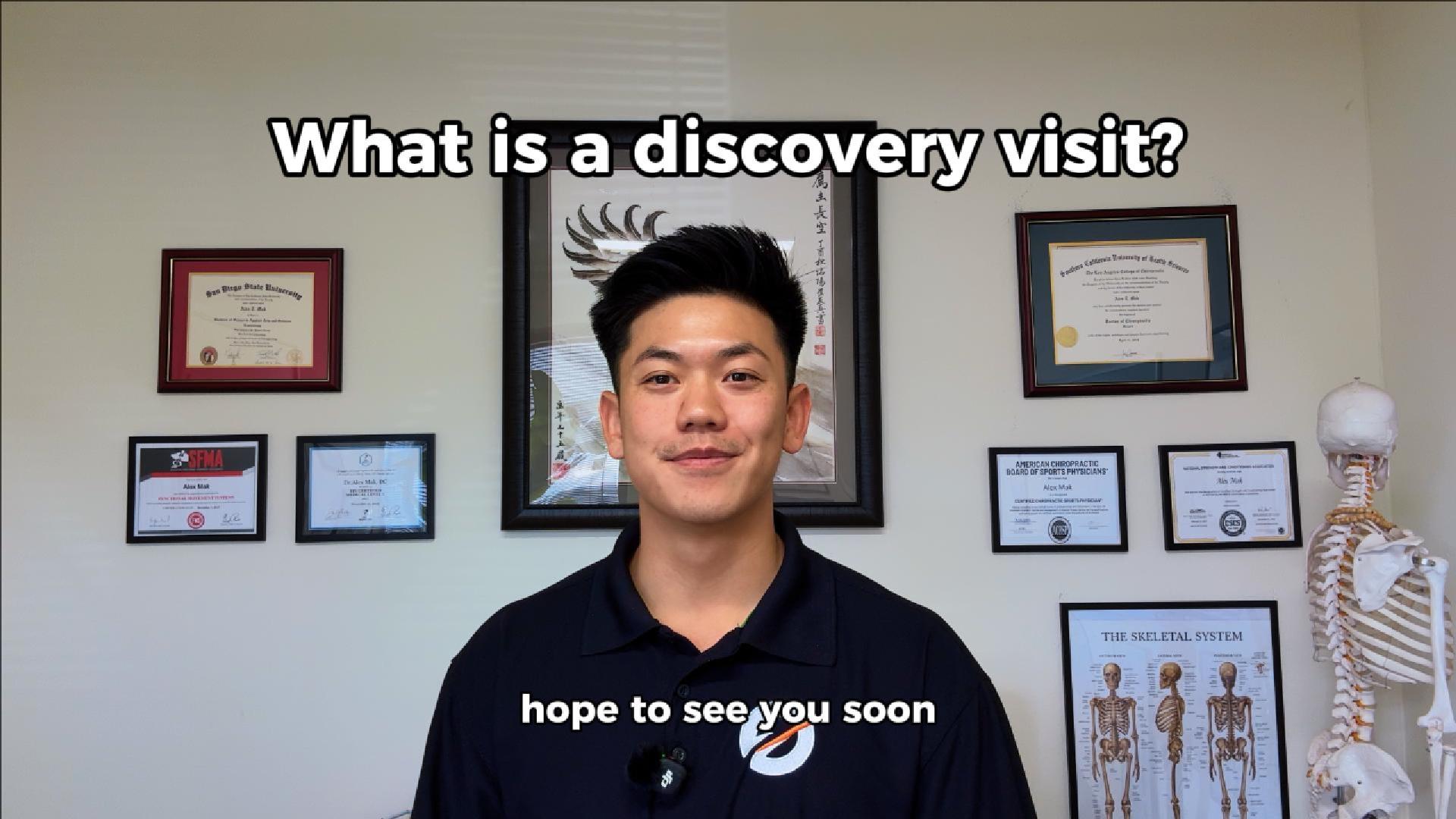
Dr. Alex Mak, DC, CCSP, CSCS, QME
I was the kid who was told to quit after years of sports and constant injuries, so I became the provider I never had, earning a kinesiology degree at SDSU, graduating chiropractic school summa cum laude, and doubling my clinical hours to obsessively master human movement. Olympus Sports Therapy is built on identifying the root cause, building a real progression plan, and guiding athletes from pain and setbacks back to stronger performance.

Seek medical attention immediately if you experience:
Severe or worsening pain that doesn’t improve with rest Numbness or tingling spreading down both legs Loss of strength in your leg or foot Difficulty controlling bladder or bowel function Pain following a fall, accident, or trauma