Spine-related conditions account for approximately 264 million lost workdays annually in the United States, representing one of the most significant sources of disability and healthcare expenditure.
The complexity of spinal pain—ranging from acute injuries to chronic degenerative conditions—demands specialized expertise that integrates advanced diagnostic capabilities with evidence-based treatment protocols.
Whittier, California residents have access to exceptional spine and pain management specialists who employ sophisticated multimodal approaches addressing both immediate symptom relief and long-term functional restoration.
Experiencing persistent spine pain that disrupts your work, sleep, or daily activities? Consider exploring the comprehensive spine and pain management programs available in Whittier, where specialized practitioners combine cutting-edge interventional techniques with rehabilitative strategies designed to restore mobility and eliminate pain at its source.
1. Olympus Sports Therapy – Biomechanical Spine Care Excellence
Olympus Sports Therapy represents a paradigm shift in spine and pain management, moving beyond symptom suppression toward addressing the fundamental movement dysfunctions that perpetuate spinal conditions. Under the clinical direction of Dr. Alex Mak, DC, CCSP®, CSCS—a chiropractor with dual specialization in sports medicine and strength conditioning—this facility has pioneered an integrated approach that treats the spine as a dynamic system requiring both structural correction and functional rehabilitation.
The Movement-Centric Spine Treatment Philosophy
Olympus Sports Therapy operates on the principle that most chronic spinal pain stems from biomechanical inefficiencies and compensatory movement patterns rather than isolated structural pathology. This perspective, supported by contemporary pain science research, recognizes that tissue damage often heals within normal timeframes while dysfunctional movement patterns persist and perpetuate pain cycles.
Comprehensive Spinal Assessment Protocol:
• Detailed postural analysis identifying compensatory patterns across the kinetic chain
• Movement screening revealing restrictions and asymmetries contributing to spinal stress
• Neurological examination assessing nerve function and central sensitization markers
• Lifestyle evaluation examining occupational demands, recreational activities, and ergonomic factors
Integrated Treatment Methodology:
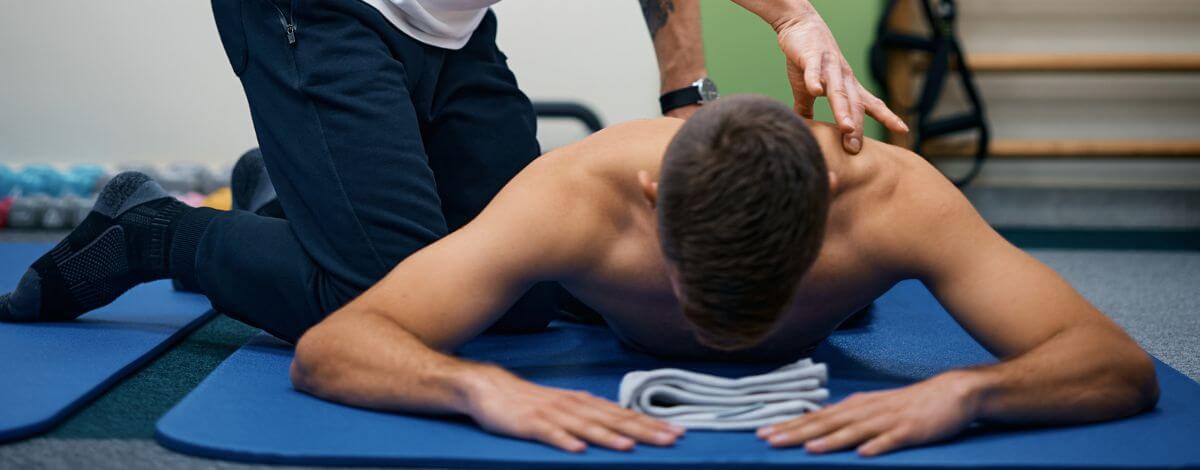
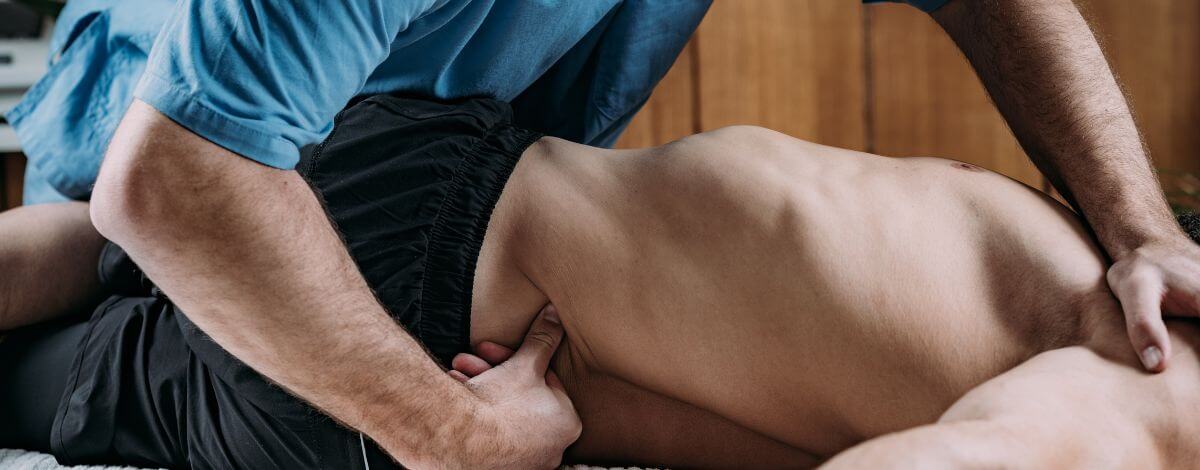
• Manual therapy techniques including spinal adjustments, soft tissue mobilization, and myofascial release targeting joint restrictions and muscular imbalances
• Progressive therapeutic exercise protocols designed to restore stability, mobility, and load tolerance
• Performance training approaches that rebuild functional capacity and prevent recurrence
• Pain neuroscience education addressing misconceptions and fear-avoidance behaviors
Specialized Spine Condition Management
Lower Back Pain Treatment:
Olympus Sports Therapy addresses the multifactorial nature of lower back pain through comprehensive evaluation of lumbar spine mechanics, hip mobility, core stability, and movement control. Treatment protocols integrate joint mobilization, targeted strengthening for deep spinal stabilizers, and functional movement retraining that transfers to real-world activities.
Neck Pain and Cervical Spine Care:
Cervical spine conditions require specialized attention to upper body posture, shoulder girdle mechanics, and the unique mobility demands of the neck. Dr. Mak’s sports therapy approach combines precise cervical adjustments with scapular stabilization exercises and postural correction strategies.
Athletic Spine Rehabilitation:
For athletes and active individuals, Olympus Sports Therapy provides sport-specific spine rehabilitation that not only eliminates pain but optimizes performance. This includes analysis of sport-specific movement patterns, identification of technique flaws contributing to spinal stress, and progressive return-to-sport protocols.
2. PIH Health Pain Management – Interventional Spine Specialists
PIH Health Pain Management delivers hospital-based spine and pain management services with access to advanced interventional procedures and comprehensive medical resources.
Advanced Interventional Capabilities
• Epidural steroid injections for radicular pain and disc-related conditions
• Facet joint injections and radiofrequency ablation for arthritis-related spinal pain
• Spinal cord stimulation for complex regional pain syndromes
• Minimally invasive procedures performed under fluoroscopic guidance
Multidisciplinary Coordination
• Board-certified pain management physicians specializing in spine conditions
• Integration with neurosurgery and orthopedic spine surgery when indicated
• Physical medicine and rehabilitation consultations
• Access to advanced imaging including MRI, CT, and functional studies
3. BioHealth Pain Management – Academic-Informed Interventional Care
BioHealth Pain Management delivers cutting-edge interventional spine and pain management under the direction of Dr. Rostam Khoshsar, a board-certified physician who serves as assistant clinical professor at the University of California, Irvine, and director of the anesthesia pain clinic at the Veterans Administration Medical Center in Long Beach With a Whittier location at 14350 Whittier Boulevard, Suite 310, this practice brings academic rigor and research-backed approaches to complex spine and pain conditions.
Research-Driven Treatment Philosophy
Dr. Khoshsar maintains active involvement in advanced interventional pain medicine research and has authored numerous publications ensuring patients benefit from the latest evidence-based protocols. His pioneering work includes utilization of stellate ganglion block for PTSD treatment, which was spotlighted on CBS News 60 Minutes demonstrating commitment to innovative approaches that extend beyond traditional pain management.
4. Spine & Pain Institute Los Angeles – Comprehensive Multimodal Care
Spine & Pain Institute Los Angeles, based in Pasadena but actively serving Whittier patients, provides comprehensive spine and pain management under Dr. Taher Saifullah, who is double board-certified in Anesthesiology and Pain Medicine and completed residency at the prestigious Cleveland Clinic and pursued competitive fellowship training at Rush University Medical Center in Chicago Pain Management in Pasadena | Pain Management Los Angeles.
Advanced Interventional Procedures
• Spinal cord stimulation for complex regional pain syndrome, neuropathic pain, failed back surgeries, and chronic neck, low back, and joint pain
• Epidural steroid injections for radicular spine conditions
• Radiofrequency ablation for chronic facet-mediated pain
• Nerve blocks for acute and chronic pain conditions
5. Natural Healing Therapies – Holistic Neuromuscular Care
Natural Healing Therapies, conveniently located at 13710 Whittier Boulevard, Suite 105, provides comprehensive chiropractic spine care with emphasis on nervous system health and natural healing approaches. Under the direction of Dr. Salha, who has served the Whittier and Los Angeles community since 2015, this practice focuses on addressing root causes of spinal dysfunction through holistic methodologies.
Evidence-Based Spine and Pain Management: What Research Reveals
The Superiority of Multimodal Treatment Approaches
Contemporary research demonstrates that multidisciplinary biopsychosocial rehabilitation interventions prove more effective than usual care (moderate quality evidence) and physical treatments (low quality evidence) in decreasing pain and disability in people with chronic low back pain. A landmark Cochrane systematic review analyzing thousands of patients revealed that the pooled standardized mean difference comparing multidisciplinary rehabilitation with usual care corresponds to approximately 0.5 points on a 0-10 pain scale and 1.5 points on a 24 point Roland-Morris disability scale.
A comprehensive meta-analysis of 65 studies evaluating efficacy of multidisciplinary treatments for chronic back pain revealed that multidisciplinary treatments are superior to no treatment, waiting list, as well as single-discipline treatments such as medical treatment or physical therapy alone. Significantly, these effects appeared stable over time, with beneficial outcomes extending beyond pain relief to include improvements in mood, interference, behavioral variables such as return to work, and reduced healthcare system utilization..
Manual Therapy and Exercise: Synergistic Effects
A 2024 randomized controlled trial published in Applied Sciences comparing home exercise with manual therapy versus supervised exercise found that manual therapy reduced disability by 70% in chronic nonspecific low back pain patients, with significant improvements in spinal mobility and muscle endurance. Research examining combined approaches found that manual therapy improves joint mobility and modulates pain processing through neurophysiological mechanisms, while progressive exercise protocols address deconditioning and restore functional capacity.
Another 2024 longitudinal cohort study analyzing 2,309 patients receiving 61 hours of highly individualized interdisciplinary multimodal pain treatment demonstrated significant improvements with moderate to very large effect sizes across all important domains including pain, fatigue, disability, work capacity, and quality of life. These improvements remained significant at 12-month follow-up, supporting the durability of comprehensive multimodal interventions.
Key Components of Effective Contemporary Spine Treatment
Evidence-Based Manual Therapy Integration
Modern manual therapy encompasses spinal manipulation and mobilization techniques that address joint restrictions, reduce muscle tension, and improve neuromuscular control. Research indicates that mobilization produces passive movements within or at the limit of joint range, while manipulation techniques thrust the joint beyond its restricted range, with available evidence suggesting no single technique demonstrates superiority over others when appropriately applied.
Progressive Exercise Rehabilitation
Strength-building, spinal stabilization, stretching, aerobic exercises, and McKenzie method protocols demonstrate effectiveness in reducing pain and disability in both short and long term for chronic low back pain. Core stabilization exercises combined with functional movement training address the deconditioning that perpetuates chronic pain disability while simultaneously improving stamina, endurance, and functional status through performance training approaches.
Pain Neuroscience Education
Contemporary spine care incorporates education about pain mechanisms, helping patients understand that persistent pain doesn’t necessarily indicate ongoing tissue damage. This knowledge reduces fear-avoidance behaviors and promotes active engagement in rehabilitation. Emerging research demonstrates that pain neuroscience education combined with manual therapy and motivational interviewing produces statistically significant improvements in pain perception, pressure pain thresholds, disability, kinesiophobia, and catastrophizing compared to manual therapy alone.
Frequently Asked Questions
How do I know if my spine pain requires medical attention or will resolve on its own?
Seek immediate evaluation for red flags including severe or progressive neurological symptoms, loss of bowel or bladder control, unexplained weight loss, fever, or pain following significant trauma. For persistent pain beyond 6-8 weeks or pain significantly impacting function, professional evaluation with a spine specialist is appropriate to develop a comprehensive treatment plan.
What’s the difference between a chiropractor, physical therapist, and pain management physician for spine care?
Chiropractors like Dr. Alex Mak, DC, CCSP®, CSCS specialize in spinal manipulation and adjustment techniques combined with therapeutic exercise and manual therapy. Physical therapists focus on movement rehabilitation, therapeutic exercise, and manual therapy without spinal manipulation in most states. Pain management physicians provide medical interventions including medications and injections. The most effective approach often involves coordination between these specialties based on individual needs, with sports therapy bridging multiple disciplines for active individuals.
Will I need surgery for my spine condition?
The vast majority of spine conditions respond to conservative, non-surgical treatment including manual therapy, exercise rehabilitation, and comprehensive pain management approaches. Research demonstrates that multidisciplinary rehabilitation programs often achieve outcomes comparable to surgery for many, but not all, chronic spine conditions.
Surgery becomes appropriate only when conservative care fails and specific criteria are met, including significant neurological compromise, structural instability, or severe functional limitation despite comprehensive non-surgical management. Your spine specialist will help determine whether surgical consultation is appropriate.
How long does spine pain treatment typically take before I see improvement?
While every case is different, acute spine pain often responds within 4-8 weeks of appropriate treatment. Chronic conditions that have persisted for months or years typically require 8-12 weeks of consistent intervention before significant improvement occurs.
Contemporary research shows that improvements continue through 12-month follow-up periods with comprehensive multimodal treatment. Some patients experience immediate relief while others require longer treatment periods depending on condition complexity, duration, and individual factors. Integrated approaches combining sports therapy with targeted rehabilitation often accelerate recovery timelines.
Can I exercise with spine pain, or should I rest completely?
Modern spine care emphasizes staying active within tolerable limits rather than complete rest. Research consistently shows that prolonged rest worsens outcomes by promoting deconditioning and fear-avoidance, while appropriate activity facilitates recovery.
Dr. Alex Mak will provide specific activity guidelines based on your condition, helping you distinguish between harmful pain signals and the discomfort of reconditioning. Performance training approaches can help rebuild capacity safely while managing symptoms.
Why does my spine pain keep coming back even after treatment?
Recurrent spine pain often indicates that underlying movement dysfunctions, muscle imbalances, or lifestyle factors haven’t been adequately addressed. Evidence demonstrates that addressing kinesiophobia, self-efficacy, and catastrophizing alongside physical rehabilitation reduces recurrence rates. Effective long-term management requires identifying and correcting these root causes rather than simply treating pain episodes.
Your specialist can help develop strategies for prevention including specific exercises, ergonomic modifications, and lifestyle adjustments through comprehensive sports therapy programming.
Are spinal injections safe, and how effective are they?
Spinal injections including epidural steroid injections and facet joint procedures demonstrate good safety profiles when performed by qualified specialists.
Effectiveness varies depending on diagnosis, with some conditions responding better than others. Research indicates that injections work best as part of comprehensive multimodal treatment that includes rehabilitation rather than as standalone interventions. Your pain management physician will discuss risks, benefits, and expected outcomes specific to your situation.
What can I do at home to support my spine health between treatment sessions?
Home care strategies include performing prescribed therapeutic exercises consistently, maintaining appropriate activity levels, practicing good ergonomics during work and daily activities, managing stress through relaxation techniques, maintaining healthy sleep habits, and staying physically active through activities you enjoy. Evidence supports that home exercise programs combined with professional treatment significantly enhance outcomes. Your treatment team at facilities like Olympus Sports Therapy will provide specific recommendations tailored to your condition and lifestyle, ensuring optimal recovery between sessions.