
Lower back pain affects approximately 80% of Americans at some point in their lives, making it one of the most prevalent health concerns facing active individuals today. While exercise remains crucial for recovery and prevention, certain movements can worsen existing conditions or create new problems. Understanding which exercises place excessive stress on your lumbar spine enables you to make informed decisions about your movement practice.
The spine’s complex architecture involves vertebrae, intervertebral discs, ligaments, and surrounding musculature working in concert to support your body’s weight and facilitate movement. When specific exercises impose compressive forces beyond what these structures can safely handle, injury risk escalates significantly.
Developing a personalized movement strategy that protects your spine while building lasting strength requires understanding both what to avoid and what to embrace. Many sports-focused rehabilitation practices in the Whittier, CA area now offer complimentary assessments to evaluate individual movement patterns and identify potential risk factors before they escalate into chronic issues.
Understanding Spinal Loading Dynamics
Before examining specific exercises to avoid, it’s essential to understand how different movements affect your lower back. Your lumbar spine experiences various types of stress during exercise: compression (vertical loading), shear (horizontal sliding forces), and torsion (twisting forces). Exercises that combine multiple stress types or exceed safe compression thresholds present the highest injury risk.
The intervertebral discs between your vertebrae function as shock absorbers, but they’re vulnerable to cumulative trauma from repetitive flexion and excessive loading. Submaximal cumulative loading can cause trauma without forewarning, as repetitive exercises where the lumbar spine flexes, rounds, or flattens will overstress discs and ligaments over time.
1. Traditional Sit-Ups and Full-Range Crunches
Traditional sit-ups impose substantial compressive forces on the lumbar spine that frequently exceed safe thresholds. Research demonstrates that traditional sit-ups impose 3,300 Newtons of compression on the spine—precisely at the limit established by occupational safety standards, with each repetition contributing to cumulative stress.
The biomechanical problem stems from how sit-ups engage the hip flexors. These movements push your curved spine against the floor and work the hip flexors—muscles running from the thighs to the lumbar vertebrae. When hip flexors become too strong or tight, they exert pulling forces on the lower spine, creating discomfort.
Why This Movement Patterns Causes Problems
Increased muscle activation anteriorly results in both initial hyperextension and subsequent hyperflexion of the lumbar spine, contributing to substantial compressive forces during sit-up execution. This flexion-extension cycle places the disc’s annulus fibers under significant stress, potentially leading to delamination over time.
Even variations with bent knees fail to adequately reduce spinal loading. Testing revealed no biologically significant differences between bent-knee and straight-leg sit-up techniques regarding lumbar compressive loads.
Safer Alternative Movement
Instead of traditional sit-ups, consider the McGill curl-up, which maintains spinal neutral position throughout the movement.
Lie on your back with one knee bent and the other leg straight. Place your hands beneath your lower back to support its natural curve. Raise only your head and shoulders slightly off the floor while bracing your core muscles, hold for several breaths, then lower with control. This modification challenges the rectus abdominis while minimizing compressive loads.
2. Superman Exercise (Prone Hyperextension)
The Superman exercise—lying prone while simultaneously lifting both arms and legs—has been a fitness staple for decades, but recent biomechanical analysis reveals concerning stress patterns. According to Stuart McGill, a leading expert in low back disorders, the Superman exercise generates nearly 6,000 Newtons of compression on a hyperextended spine, transfers load to the facet joints, and compresses the interspinous ligaments.
This compression value is particularly alarming when contextualized. Converting units reveals that 6,000 Newtons equals 1,349 pounds of force to the lumbar spine—exceeding safety guidelines by approximately 600 pounds.
Anatomical Vulnerabilities
When lying prone, most people are already positioned in spinal extension due to abdominal tissue, predisposing the spine to hyperextension before the exercise even begins. Adding simultaneous limb elevation intensifies this problematic position, placing facet joints and posterior ligamentous structures under excessive stress.
The Canadian Chiropractic Association notes that research demonstrates this exercise creates the highest amount of stress to the joints of the low back, with most people experiencing considerable discomfort during execution.
Superior Training Alternative
The bird dog exercise provides equivalent muscle activation with substantially reduced spinal loading. Begin on hands and knees with a neutral spine. Simultaneously extend one arm forward and the opposite leg backward, maintaining level hips and engaged core musculature.
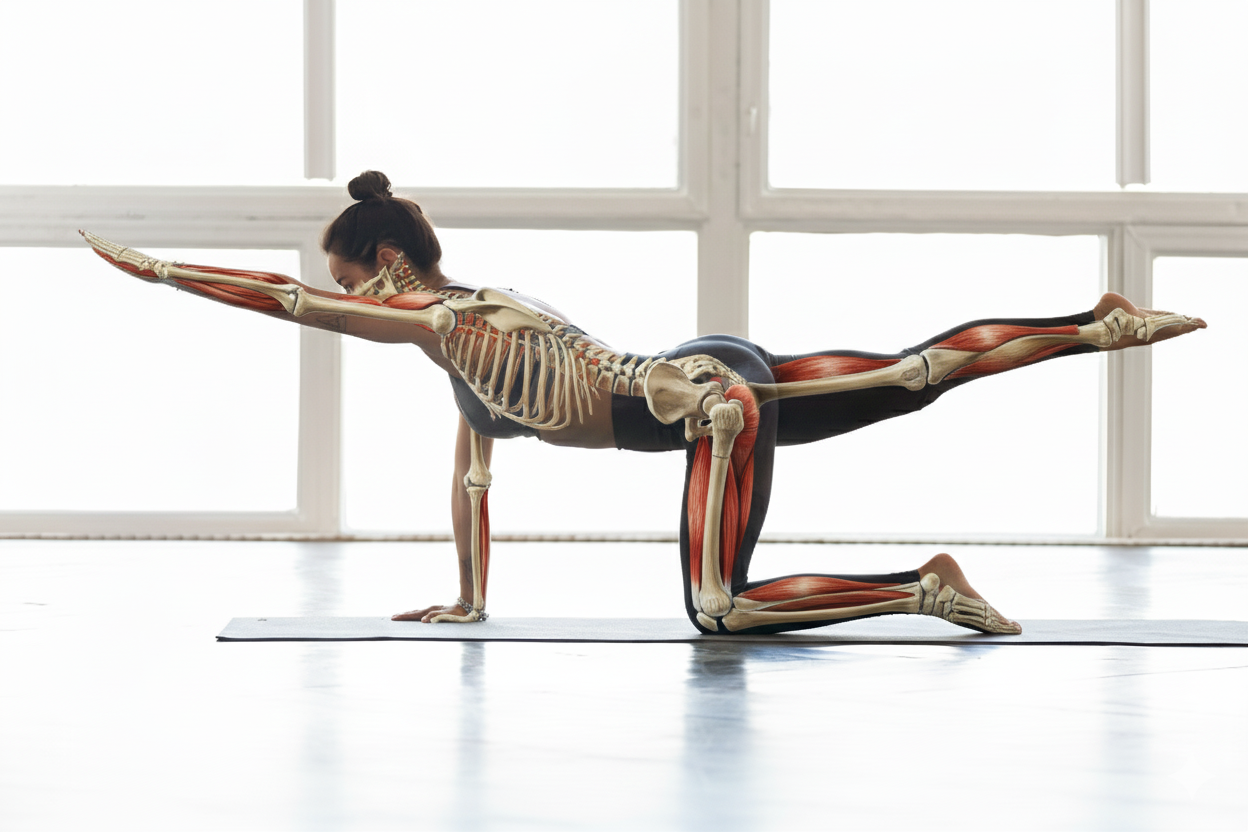
This diagonal pattern activates both the lumbar multifidus for stabilization and the erector spinae for extension, achieving the training stimulus without excessive compression.
3. Standing Toe Touches
Standing toe touches appear deceptively simple but create problematic loading patterns for the lower back. When performed on individuals with pre-existing conditions like herniated discs, the added stress from toe touches can exacerbate pain and discomfort, while conditions like arthritis or spinal stenosis can become aggravated by the excessive pressure.
Biomechanical Concerns
When moving directly into a toe touch from an erect position, most of the stretch concentrates at the lower back rather than distributing throughout the entire posterior chain. This forces flexion into an isolated area instead of properly targeting the hamstrings.
Standing toe touches may worsen existing back injuries by compressing the spine beyond what it can safely manage, particularly when the movement involves rapid or forceful execution.
The position also creates shear forces across the lumbar segments as your torso’s weight translates forward over a flexed spine, placing disc structures at increased risk.
Effective Substitution
A supine hamstring stretch provides superior outcomes: lie on your back with one knee bent, wrap a towel around the foot of your straight leg, and use it to pull the leg upward while maintaining knee extension.
Hold for 20 seconds and repeat on the other side, ensuring your back remains flat on the floor throughout. This position eliminates gravitational loading on the spine while effectively stretching the hamstring complex.
4. Double Leg Raises
Bilateral leg raises—lifting both legs simultaneously while supine—create disproportionate stress on the lumbar spine relative to their abdominal training benefits. Double leg raises place considerable demand on your low back, as this movement requires significant core strength that many individuals lack.
Load Distribution Problems
The exercise’s difficulty stems from the long lever arm created by extended legs and the hip flexors’ activation pattern. As these muscles contract to lift the legs, they exert anterior pulling forces on the lumbar vertebrae, increasing the spine’s lordotic curve and compressing posterior structures. Individuals lacking adequate core strength to counteract these forces experience excessive spinal extension and localized stress concentration.
Modified Approach
Single leg raises provide a safer progression: lie on your back with one knee bent and foot flat on the ground, keeping the other leg straight. Slowly lift the straight leg and hold, then lower with control. Perform 10 repetitions per leg while maintaining a flat back against the floor throughout the entire movement.
5. Loaded Back Squats with Poor Form
Heavy barbell back squats can be valuable for developing lower body strength when executed with proper form, but technical errors transform this compound movement into a significant injury risk. While squats themselves aren’t inherently problematic, the tucking of the pelvis (posterior pelvic tilt) at the squat’s bottom flexes the lumbar spine, loading discs and ligaments regardless of the external weight involved.
The “Butt Wink” Phenomenon
This posterior pelvic tilt pattern, commonly called “butt wink,” occurs when individuals descend beyond their hip mobility limits. The pelvis rotates backward to compensate, forcing the lumbar spine into flexion under load—precisely the combination most damaging to disc structures.
Barbell squats with heavy weights carried on the back should be completely avoided by individuals experiencing back pain, as carrying external loads creates additional compression risk.
Progressive Loading Strategy
Master bodyweight squats with neutral spine maintenance before adding external resistance. Focus on hip hinge mechanics, maintaining a natural lumbar curve throughout the movement range. Consider goblet squats or front squats as progression options, as these loading patterns promote more upright torso positioning and reduce posterior spinal compression.
6. High-Impact Activities and Plyometrics
Explosive movements involving running, jumping, and rapid direction changes impose repetitive jarring forces through the spine. High-impact exercises cause repetitive jarring particularly harmful for individuals with lower back arthritis or disc problems, as the impact increases pressure on spinal discs, leading to pain and potential injury.
Cumulative Stress Accumulation
Each ground contact during running or landing from a jump transmits forces up the kinetic chain. For individuals with compromised disc integrity, degenerative changes, or inflammatory conditions, these repetitive impacts accumulate faster than tissues can adequately recover, perpetuating the pain cycle.
Box jumps present additional concerns. Activities involving gravity components are particularly challenging for back structures, requiring practitioners to approach back muscle exercise slowly and steadily for optimal results.
Low-Impact Conditioning
Swimming and water aerobics provide excellent cardiovascular training without impact stress. The buoyancy of water reduces stress on your spine while delivering an effective full-body workout. Walking, stationary cycling on an upright bike, and elliptical training also maintain cardiovascular fitness while minimizing spinal loading.
7. Twisting Under Load
Exercises incorporating spinal rotation while under load or tension create complex stress patterns combining compression, shear, and torsional forces. Activities requiring spinal twisting can intensify pain and worsen underlying conditions, whether from degenerative disc disease, osteoarthritis, bulging discs, herniated discs, or spinal stenosis.
Compound Stress Mechanics
The spine’s architecture tolerates pure compression reasonably well, but combined loading patterns—particularly rotation under compression—place intervertebral discs at heightened risk. The disc’s annular fibers experience asymmetric stress, with some regions under tension while others compress, potentially leading to delamination or fissuring.
Sports and activities typically requiring twisting, such as golf and tennis, present this problematic loading pattern during active participation.
Controlled Rotation Training
When training rotation, maintain controlled movements and avoid over-rotating, with qualified yoga instructors experienced in back pain able to guide practitioners through modified poses. Pallof press variations and anti-rotation exercises build rotational stability without excessive spinal stress.
Developing Your Safe Movement Practice
Creating an effective exercise program while managing lower back pain requires thoughtful movement selection and progressive loading. Research demonstrates clear benefits from appropriate exercise. Evidence shows exercise reduces lower back pain risk by 33% when performed alone, and by 27% when combined with education, with both pain severity and disability levels lower in exercise groups compared to control groups.
The key lies in choosing movements that strengthen supporting musculature without exceeding your current tissue tolerance. Core stability exercises, neutral spine training, and gradual progression form the foundation of sustainable programs.
Movement Quality Over Intensity
Prioritize proper form and control over weight, speed, or repetition volume. The extensor muscles contain more slow-twitch than fast-twitch fibers, designed for muscular endurance rather than strength, making endurance-focused training more appropriate than maximum strength protocols.
Listen to your body’s feedback signals. Sharp pain during exercise indicates you’ve exceeded safe tissue loading and should stop immediately. The dull ache of muscle fatigue differs substantially from the acute pain of structural stress.
Professional Guidance for Optimal Outcomes
Individual variability in anatomy, injury history, and movement patterns means no single program suits everyone. Working with qualified professionals who understand both rehabilitation principles and performance training creates the optimal pathway forward.
At Olympus Sports Therapy, Dr. Alex Mak combines expertise as a Doctor of Chiropractic, Certified Chiropractic Sports Physician (CCSP®), and Certified Strength & Conditioning Specialist (CSCS) to develop comprehensive treatment plans. This unique combination addresses both the clinical rehabilitation aspects of back pain and the strength development necessary for long-term resilience.
The clinic’s approach emphasizes movement-based rehabilitation rather than passive treatments, giving you tools to manage your condition actively. Recent client Rick Price notes: “After just 29 sessions, I am now able to resume regular exercise, have regained most of my previous strength level, and no longer have any need for pain medications. At 61 years old, my body once again feels like it did some 10-15 years ago.”
Taking Your Next Step Toward Pain-Free Movement
Lower back pain need not define your fitness journey or limit your physical capabilities. By understanding which exercises create excessive spinal stress and embracing safer alternatives, you develop a sustainable movement practice supporting long-term health.
The path forward involves more than simply avoiding problematic exercises—it requires building a comprehensive understanding of your body’s unique needs, developing proper movement patterns, and progressively challenging your system within appropriate parameters. Working with professionals who understand both rehabilitation principles and performance training creates the optimal pathway forward, particularly when they offer integrated approaches combining chiropractic expertise with sports medicine and strength conditioning protocols.
Your body was designed for movement. The question isn’t whether to exercise with lower back pain, but rather which movements serve your recovery while building resilience for the long term.
Frequently Asked Questions
Can I ever return to exercises like sit-ups if my back pain resolves?
Even after pain resolution, exercises with inherently high spinal loading remain suboptimal choices when superior alternatives exist. The cumulative nature of spinal stress means that exercises exceeding safe compression thresholds contribute to degenerative changes over extended timeframes, even when they don’t cause immediate pain. Focus instead on movements providing equivalent training benefits without excessive structural cost.
How do I know if an exercise is causing harmful stress versus productive muscle fatigue?
Productive muscle fatigue manifests as a burning sensation in the working muscles, decreasing performance capacity, and generalized tiredness that resolves with rest. Harmful stress typically presents as sharp, localized pain, discomfort that worsens with continued movement, pain radiating into the legs, or discomfort persisting beyond the workout session. When uncertain, err on the side of caution and discontinue the problematic movement.
Are these exercise restrictions permanent, or can I gradually reintroduce avoided movements?
Some individuals may eventually tolerate previously problematic exercises after addressing underlying mobility restrictions, developing adequate core stability, and ensuring proper movement patterns. However, when safer alternatives achieve the same training objectives, there’s limited rationale for returning to high-risk movements. Progressive tissue loading remains important, but should occur through graduated challenge of appropriate exercises rather than reintroduction of biomechanically problematic patterns.
What’s the difference between “no pain, no gain” and harmful pain?
This outdated phrase has caused considerable confusion. Productive training creates temporary discomfort from metabolic byproducts in working muscles, typically described as burning or fatigue. This resolves quickly with rest and doesn’t involve sharp pain or lasting dysfunction. Harmful pain is typically sharp, localized to joints or specific spinal regions, worsens with continued activity, and persists afterward. Modern training philosophy emphasizes “challenge without pain” as the appropriate approach.
How quickly should I see improvement when switching to spine-safe exercises?
Most acute back pain episodes resolve within 6 weeks with appropriate management including modified activity, while chronic conditions require longer intervention periods. Individual response varies based on injury severity, consistency with rehabilitation exercises, and adherence to movement modification. Many individuals notice decreased pain within 2-4 weeks of appropriate exercise programming, with continued improvement over subsequent months as strength and motor control develop.
Should I completely avoid bending forward if I have back pain?
Forward bending represents a normal functional movement important for maintaining a healthy spine, such as when reaching to stretch in the morning, which extends the spine safely without causing pain or overloading spinal structures. The issue isn’t forward flexion itself, but rather repeated loaded flexion, rapid uncontrolled bending, or flexion combined with rotation. Mindful, controlled forward bending remains appropriate for most individuals.
What role does timing play in exercise selection for back pain?
Morning hours present increased vulnerability for the spine due to nocturnal fluid accumulation in the intervertebral discs. Evidence indicates that controlling lumbar flexion in the morning effectively reduces back pain, with one study showing pain reduction in subjects instructed to restrict early-morning bending activities. Consider scheduling more demanding exercises for later in the day after the spine has “settled” through normal daily activity.